
TLF Apparel vs Amazon: which is better in 2026

Choose TLF Apparel if you want training clothes and everyday outfits from one Gym-To-Street(R) brand; choose Amazon if you want to compare activewear across multiple brands and sellers. This 2026 comparison separates the strengths of a dedicated apparel brand from those of a marketplace, so you can choose the right shopping route rather than assume every garment performs alike.
- TLF Apparel vs Amazon: choose TLF Apparel for focused Gym-To-Street(R) apparel; choose Amazon for cross-brand shopping.
- Amazon wins on brand variety, not on a universal standard of workout-clothing quality.
- Fit and training performance require garment-level checks on both shopping routes.
- Compare the exact item, seller, measurements, and purchase terms before choosing where to buy.
Why this matters
You are comparing an apparel brand with a marketplace—not two equivalent clothing manufacturers. TLF Apparel designs men's and women's training and lifestyle apparel. Amazon sells products from multiple brands and includes third-party sellers, so the clothing you select determines much of the experience.
That distinction changes the decision. A brand-focused shopper wants a recognizable style across leggings, tops, shorts, and layers. A marketplace shopper wants to compare different manufacturers without committing to one label.
For your 2026 gym wardrobe, start with the job your clothes must do. Lifting, running, lounging, and heading out after training place different demands on fit and construction; a store name alone answers none of those questions.
At a glance
| Dimension | TLF Apparel | Amazon |
|---|---|---|
| Best for | Training enthusiasts who want a single Gym-To-Street(R) brand | Shoppers comparing activewear across brands |
| Assortment | Men's and women's training, lifestyle, and streetwear within one brand | Clothing from multiple brands and sellers |
| Standout feature | A dedicated training-to-everyday apparel identity | Cross-brand product discovery |
| Fit and sizing | Check the individual garment's measurements and fit details | Check the individual brand's measurements and fit details |
| Gym-to-everyday styling | Gym-To-Street(R) is central to the brand's positioning | You choose that look across separate listings |
| Seller comparison | A direct route to the brand's own catalog | Tools for examining the seller attached to a listing |
| Training performance | Assess the specific fabric, cut, and construction | Assess the specific fabric, cut, and construction |
| Pricing model | Direct retail purchase of individual garments | Retail and marketplace purchases tied to the selected listing |
The table gives you the shopping distinction, not a promise about every item. Neither a dedicated brand nor a marketplace guarantees that a particular waistband, bra, or training shirt fits your body.
TLF Apparel is better for a focused training wardrobe
TLF Apparel is best for training enthusiasts who want Gym-To-Street(R) clothing from one dedicated brand. Its stated range covers performance training gear, elevated everyday essentials, and lifestyle streetwear for men and women.
That focus suits you when the gym is a regular part of your routine and you want your clothing choices to reflect it. You can consider leggings, sports bras, shorts, tanks, joggers, and outer layers within the same brand rather than begin each purchase with a new manufacturer.
The limitation is choice outside that identity. One brand does not replace a cross-brand search when you want to explore unrelated styles or compare several manufacturers' approaches to the same garment.
Amazon is best for the exploratory shopper. If you have not settled on a preferred label, its marketplace format lets you investigate different brands before narrowing your search. The tradeoff is that you must judge each brand separately; finding one suitable pair of shorts does not establish the fit of another manufacturer's leggings.
Amazon offers more cross-brand choice
Amazon wins on assortment breadth because it is a multi-brand shopping destination. That is a genuine advantage when your goal is discovery rather than building around an existing wardrobe.
You can compare different approaches to activewear: fitted versus relaxed silhouettes, training-first garments versus casual basics, and different brands' descriptions of their materials. Keep the comparison within the same garment category. A relaxed cotton tee and a fitted training top solve different problems even when both appear in a workout-clothing search.
The dedicated brand's catalog offers a narrower, more focused search. Its product URLs identify 5-inch and 7-inch men's shorts, alongside 4-inch women's shorts. Those named lengths help you distinguish options, but they do not establish which cut fits your proportions best.
For 2026 shopping, use breadth deliberately. Write down your required length, intended activity, and preferred silhouette before browsing; otherwise, more options simply mean more unrelated items to evaluate.
TLF Apparel has the clearer training-to-street identity
A defined apparel identity is the dedicated brand's standout feature. Gym-To-Street(R) describes its stated approach to combining performance apparel with everyday and streetwear styles.
Amazon's standout feature is different: it helps you discover products across brands. Amazon itself is not the common designer behind every workout garment sold through the marketplace, so you cannot assign one fabric philosophy or styling direction to the entire selection.
That distinction matters when you already know what you want. A focused catalog suits a shopper seeking training-oriented shorts and a lifestyle layer. A marketplace suits a shopper who wants to compare how several brands interpret those categories.
Use the Hybrid Element 5-inch shorts as a specific starting point if that named length matches your shortlist. Then inspect the garment details rather than transferring the brand's general positioning into assumptions about lining, pockets, or stretch.
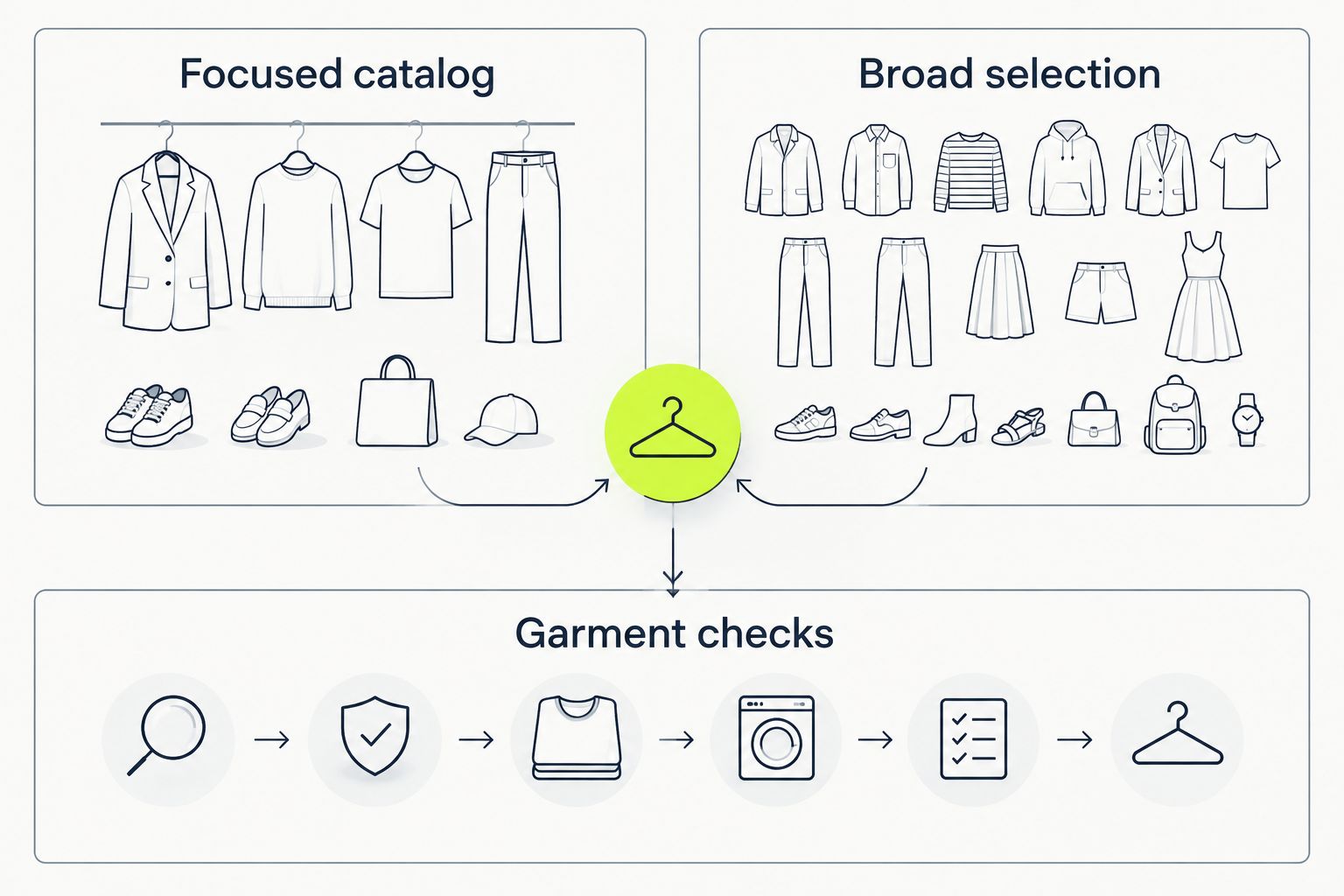
The two shopping routes have different strengths:
- Focused catalog: Best for choosing within a familiar apparel identity.
- Broad selection: Best for discovering and comparing different brands.
- Garment checks: Required whichever route you choose.
Neither route wins on fit without garment-level checks
Fit is a tie at the shopping-platform level. You need the specific garment's size guidance and your own measurements, regardless of where you buy.
Start with the measurements relevant to the item. Waist and hip measurements matter for bottoms; chest or bust measurements matter for tops, alongside any additional guidance the garment provides. Your usual size is a starting point, not proof that a new cut will fit.
For shorts, compare the named length with a pair you already wear comfortably. A 5-inch style and a 7-inch style are distinct options, but the label alone does not tell you the rise, leg opening, or how the fabric behaves during a squat.
Use this fit checklist before adding either brand's garment to your wardrobe:
- Measurements: Compare your body measurements with the item's guidance.
- Cut: Identify whether the intended fit matches your preference.
- Movement: Check whether you can bend, reach, and sit without restriction.
- Adjustment: Notice whether you repeatedly pull at the waistband or hem.
Neither route deserves a universal true-to-size verdict. Different cuts require separate decisions, even within one brand.
TLF Apparel makes Gym-To-Street(R) styling easier to target
The dedicated brand wins when training-to-everyday styling is your specific brief. Its stated product categories include training pieces, joggers, lifestyle pants, sweatpants, comfort sets, graphic tees, hoodies, and jackets.
You still need to choose intentionally. A garment suited to lounging is not automatically the right layer for a hard session, and a training top does not have to serve every social setting afterward.
Amazon remains useful when you want to mix brands or build an outfit around clothing you already own. That freedom is its advantage; the corresponding work is checking proportions, materials, and intended use across separate listings.
For a 2026 wardrobe refresh, decide whether you want a focused brand identity or an independently assembled outfit. Neither approach is wrong. Choose the dedicated brand for its stated styling direction, and choose the marketplace when mixing labels is the goal.
Amazon is better for comparing sellers
Amazon wins when comparing seller options is part of your shopping process. The marketplace format makes seller identity a separate consideration from the brand printed on a garment.
Check the selected listing's seller and fulfillment information. Do not assume that two similar-looking listings represent the same seller, the same product, or the same purchase terms.
The brand's own storefront provides a direct route to its catalog. That suits you when you have already chosen the label and do not want to compare marketplace sellers for that purchase.
The tradeoff is straightforward: direct brand shopping narrows the seller decision, while marketplace shopping creates more seller details to evaluate. Neither route earns an automatic shipping or returns victory. Read the terms attached to your actual purchase before placing the order.
In 2026, keep seller checks separate from garment checks. A clear purchase process does not establish fabric quality, just as an appealing fabric description does not establish the purchase terms.
Neither route guarantees better training performance
Training performance is another honest tie until you compare specific garments. A marketplace contains different products, while a brand's catalog contains different cuts and intended uses.
Assess what your session requires. For leggings, examine fit, coverage, waistband behavior, and freedom of movement. For shorts, examine length, leg opening, construction, and any stated lining details. For tops, examine the listed fabric and whether the cut suits your movements.
Named fabric technology is useful information, but it is not a substitute for the garment description. For example, the supplied description for the Swole Tee names Cotton Luxe DNA(TM), while the Bamboo Stringer Tank description identifies lightweight fabric and a racerback stringer construction.
These are different top styles, not interchangeable answers to every workout:
- TLF Swole Tee: Best for shoppers seeking a short-sleeve top with the stated Cotton Luxe DNA(TM) fabric.
- TLF Bamboo Stringer Tank: Best for shoppers who prefer the stated lightweight fabric and racerback stringer cut.
Read those details alongside your fit needs. Do not infer an unlisted moisture-management rating, durability result, or support level from either product name.


Pricing models: direct retail versus marketplace shopping
Neither shopping model establishes better value by itself. The dedicated storefront sells individual garments directly; Amazon combines retail and marketplace listings from different brands and sellers.
Direct shopping gives you one brand context for evaluating the purchase. Marketplace shopping gives you flexibility to compare different listings, but you must confirm that the products genuinely match your requirements before treating them as alternatives.
For your 2026 decision, compare like with like: garment category, stated materials, construction, intended use, and purchase terms. A familiar brand name or a large selection does not answer whether the particular item is worth buying for your routine.
Final verdict: choose by your shopping goal
Choose TLF Apparel if you are a brand-focused training enthusiast
TLF Apparel wins for the shopper building a training and everyday wardrobe around Gym-To-Street(R) style. Choose this route when the brand's stated apparel identity matches your preferences and you want to select within its men's and women's categories.
Accept the narrower brand choice. Still check every garment's fit and construction rather than expecting the label to answer those questions.
Choose Amazon if you are a cross-brand activewear shopper
Amazon wins for the shopper exploring multiple labels and comparing individual listings. Choose this route when discovery, brand variety, or seller comparison matters more than staying within one apparel identity.
Accept the extra evaluation work. Treat each new brand, garment, and seller as a separate purchase decision.
| Dimension | Winner |
|---|---|
| Focused training wardrobe | TLF Apparel |
| Cross-brand assortment | Amazon |
| Defined training-to-street identity | TLF Apparel |
| Fit and sizing | Tie: garment-dependent |
| Gym-To-Street(R) styling focus | TLF Apparel |
| Seller comparison | Amazon |
| Training performance | Tie: garment-dependent |
| Pricing model and value | No universal winner |
FAQ
Is TLF Apparel better than Amazon for gym clothes?
TLF Apparel is the better shopping route for a focused Gym-To-Street(R) wardrobe, while Amazon is better for comparing activewear across brands. Fit and performance still depend on the exact garment.
Which is better for comparing different workout clothing brands?
Amazon is better for cross-brand comparison because it is a multi-brand marketplace. Compare equivalent garment types and check each selected listing's seller.
Does buying directly from a clothing brand guarantee a better fit?
No, buying directly does not guarantee a better fit. Use the individual garment's measurements and fit guidance rather than relying only on your usual size.
Are all workout clothes on Amazon the same quality?
No, Amazon workout clothes come from different brands and product lines. Evaluate the specific fabric, construction, fit, and seller rather than assigning one quality standard to the marketplace.
Is either shopping route always cheaper?
Neither shopping route has a universal cost advantage. Compare the exact items and current purchase terms rather than assuming a dedicated brand or marketplace always offers better value.
Should I choose 5-inch or 7-inch gym shorts?
Choose the length that matches your preferred coverage and movement needs. Compare the named length with shorts you already wear comfortably, then check the garment's rise and leg opening.
What should I check before buying workout clothes in 2026?
Check the garment's measurements, stated fabric, intended use, construction, and purchase terms. On a marketplace, also check the seller attached to the selected listing.
One last thing
Write down what bothers you about your current gym clothes before shopping. A shifting waistband, restrictive leg opening, or unwanted sleeve fit gives you a specific problem to solve; a store name does not.
Choose your shopping route around that problem. Then judge the garment on whether its stated design addresses it.
Laissez un commentaire